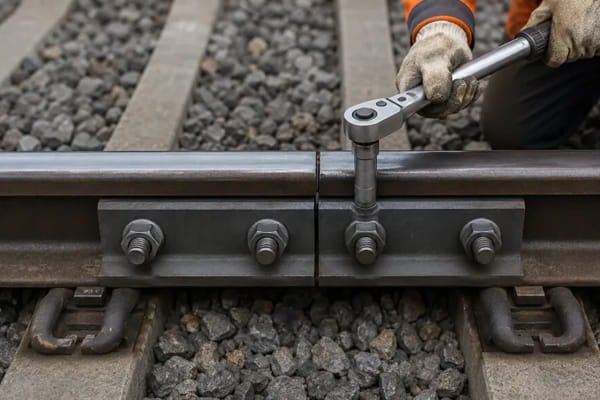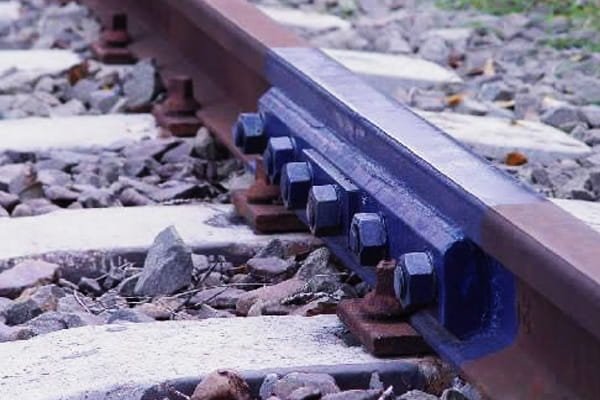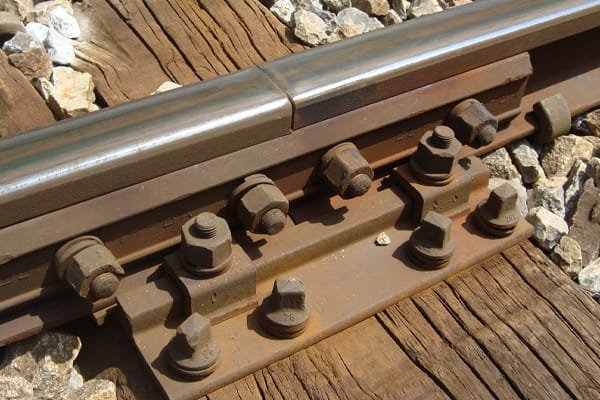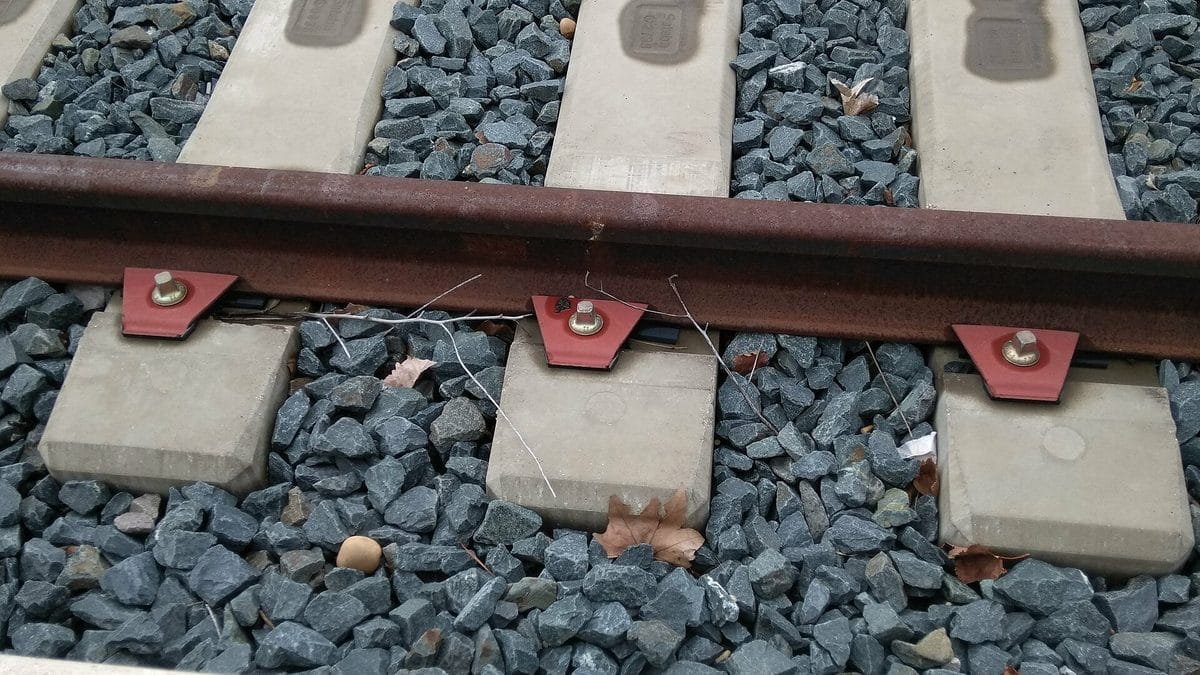
Wherever two lengths of rail meet without being welded, the joint is held together by a pair of fish plates — steel bars that sit against the rail web on either side — and the fish bolts that clamp them. It is a simple arrangement, but it is one of the most heavily worked points in the track. Every wheel that passes hammers the joint, and if the bolts loosen or fail, the rail ends start to move independently.
What a fish bolt actually does
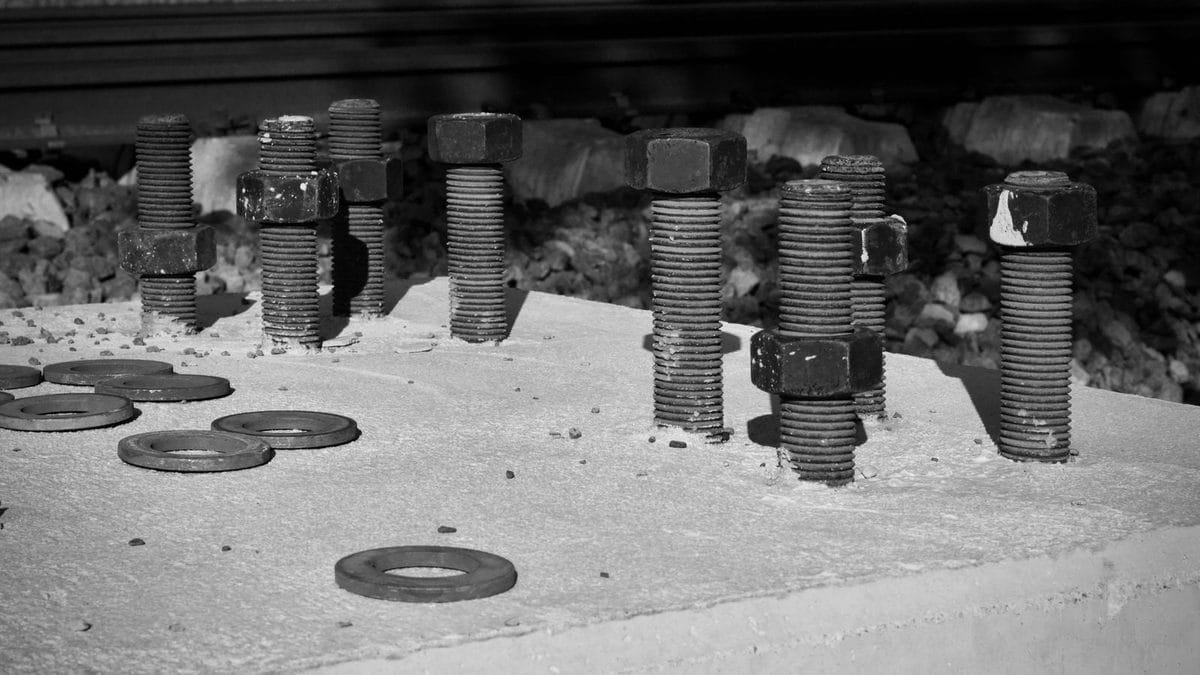
A fish bolt passes through the first fish plate, the rail web and the second fish plate, and is tightened with a nut. Together, the bolts in a joint:
- keep the two rail ends aligned vertically and laterally;
- transfer bending load from one rail to the next through the fish plates;
- hold the joint gap so the rails can still expand and contract with temperature.
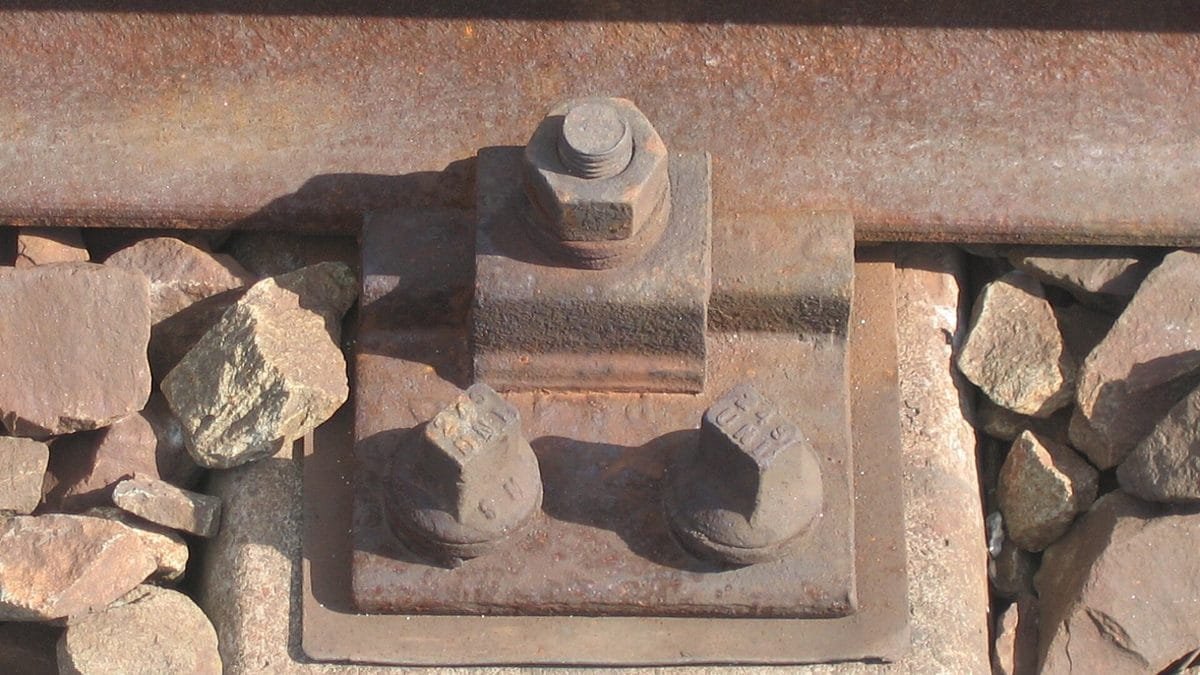
A joint usually carries four or six bolts depending on the rail section and the fish plate design. They are fitted with nuts — and on most designs the bolt has a shaped neck or head that locates in the fish plate so the bolt does not turn while the nut is tightened.
Why the RDSO drawing matters
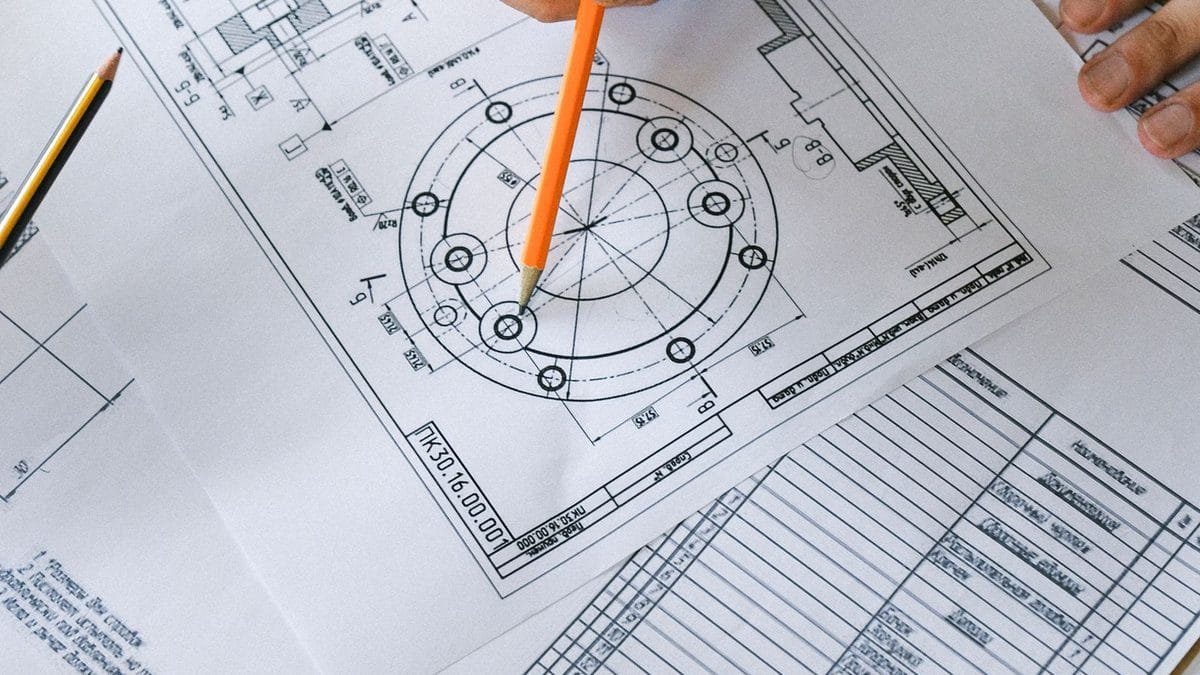
On Indian Railways, track fasteners are specified by drawings issued by the Research Designs and Standards Organisation (RDSO). A fish bolt drawing fixes the diameter, length, head and neck form, thread and nut. Because the bolt has to fit a particular fish plate and rail section, a bolt that is "nearly the same" is not good enough: the head may not seat, the neck may not locate, or the thread length may be wrong for the clamping thickness.
S A Engineering manufactures fish bolts with nuts to three RDSO drawings — RDSO/T-1899, RDSO/T-11501 and RDSO/T-11503 — in sizes from M18 to M25.
Common reasons fish bolts are replaced
- Loosening: vibration and impact at the joint gradually reduce bolt tension if bolts are not re-tightened during maintenance.
- Wear and corrosion: joints collect moisture and debris, and threads that corrode are hard to re-tighten.
- Breakage: a bolt that has lost its tension takes bending loads it was never meant to carry, and can fail by fatigue.
- Renewals: when fish plates are renewed, bolts are usually renewed with them.
Ordering fish bolts: a short checklist
- Quote the RDSO drawing number and its alteration — drawings are revised over time.
- Confirm the size if the drawing covers more than one.
- State the quantity of bolts with nuts.
- Include any inspection requirement named in your tender or order.
- Give the delivery location and date.
With these details we can confirm feasibility, price and lead time in one reply. If you are also renewing turnout fastenings, see our guide to track bolts for points and crossings.