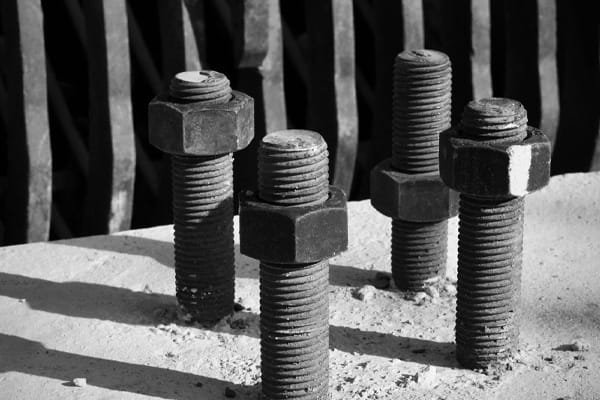
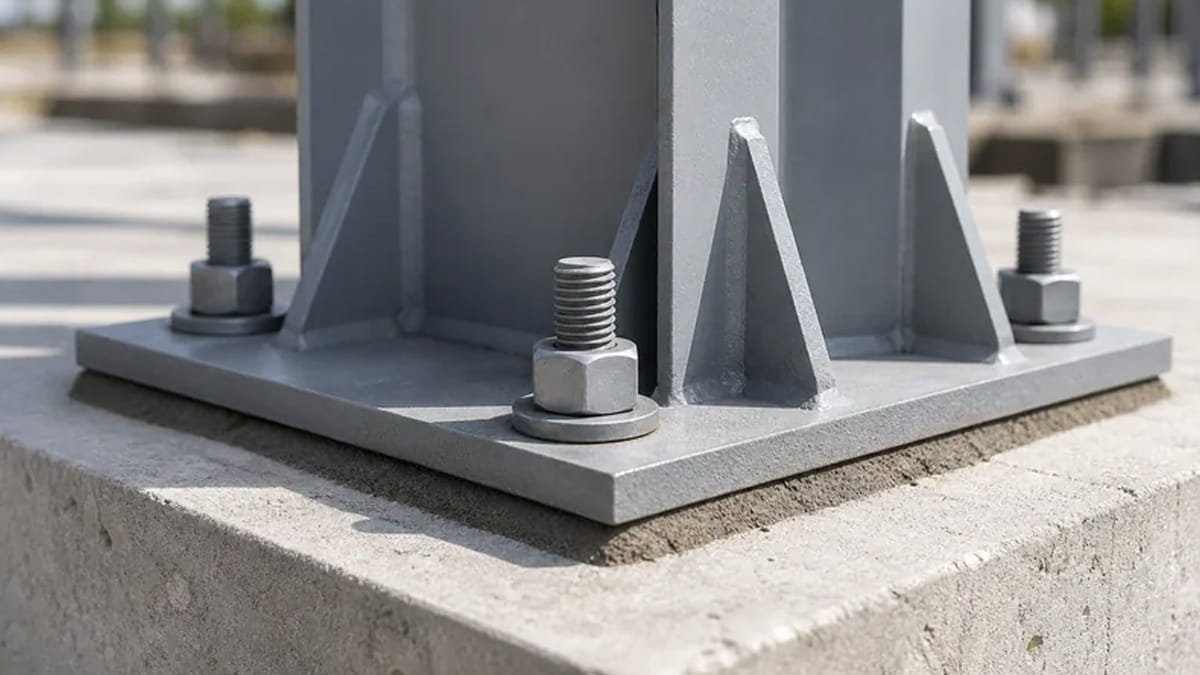
Every machine base, structural column and plant skid ends at a set of foundation bolts cast into concrete. Get them right and the base plate drops straight onto its bolts on site. Get one dimension wrong and the installation team is chipping concrete. In India, foundation bolts are covered by IS 5624, and most projects also issue their own foundation drawings.
Common types of foundation bolt
- L-type (bent) bolts — a straight bolt with a 90° bend at the bottom that locks into the concrete. Widely used for columns and light machinery.
- J-type bolts — similar, with a curved hook at the end.
- Rag bolts — a tapered, roughened or jagged end that is grouted into a pocket.
- Plate-anchored or T-head bolts — a straight bolt with an anchor plate or head at the bottom, used for heavier loads.
- Sleeved bolts — set inside a sleeve so the top can be moved slightly to line up with the base plate before grouting.
The dimensions your manufacturer needs
| Diameter | For example M30 |
|---|---|
| Overall length | End to end, including any bend |
| Embedment | Length below the concrete surface |
| Projection | Length above the concrete — base plate, grout, nuts and washers |
| Thread length | Usually projection plus an allowance for adjustment |
| End detail | Bend length and radius, hook, or anchor plate size |
| Nuts and washers | How many per bolt (often two nuts) |
| Grade and finish | Property class and coating |
Practical tips
- Use a template to hold bolts at the correct spacing during concreting.
- Protect the threads during concreting so they are clean when the base plate is fitted.
- Allow enough projection for grout thickness, base plate, washer and two nuts plus a few threads beyond.
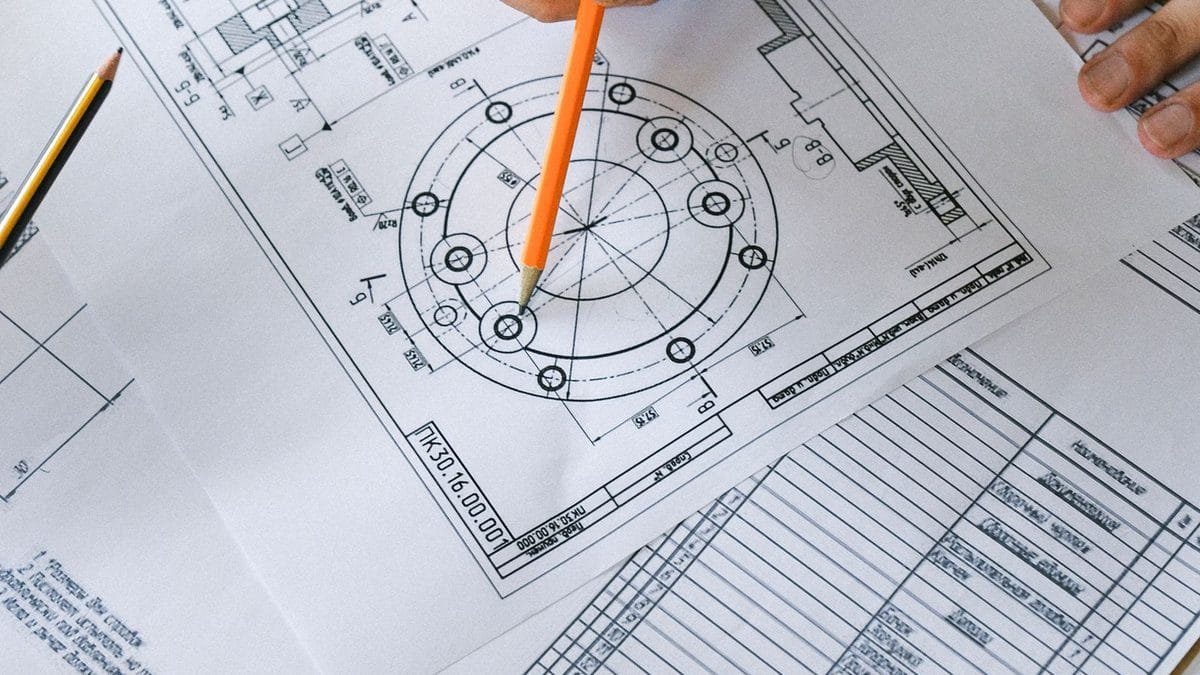
S A Engineering manufactures foundation bolts up to M64 to your drawing. Send the foundation drawing, or the dimensions above, with the quantity.